Planning an in-person event is like conducting a live orchestra. Every moving piece needs to perform in sync, from registration and check-in to attendee engagement and data collection. One wrong note can throw off the entire experience. That’s where event platforms become your secret weapon.
You might associate event platforms with flashy tech event coordinators only use at virtual or hybrid events. But they’re absolutely essential at live events, too. A modern, powerful live event platform makes the difference between a chaotic scramble and a seamless, memorable experience.
Let’s dive into how event platforms streamline in-person events, reduce your workload, and create a better experience for everyone involved.
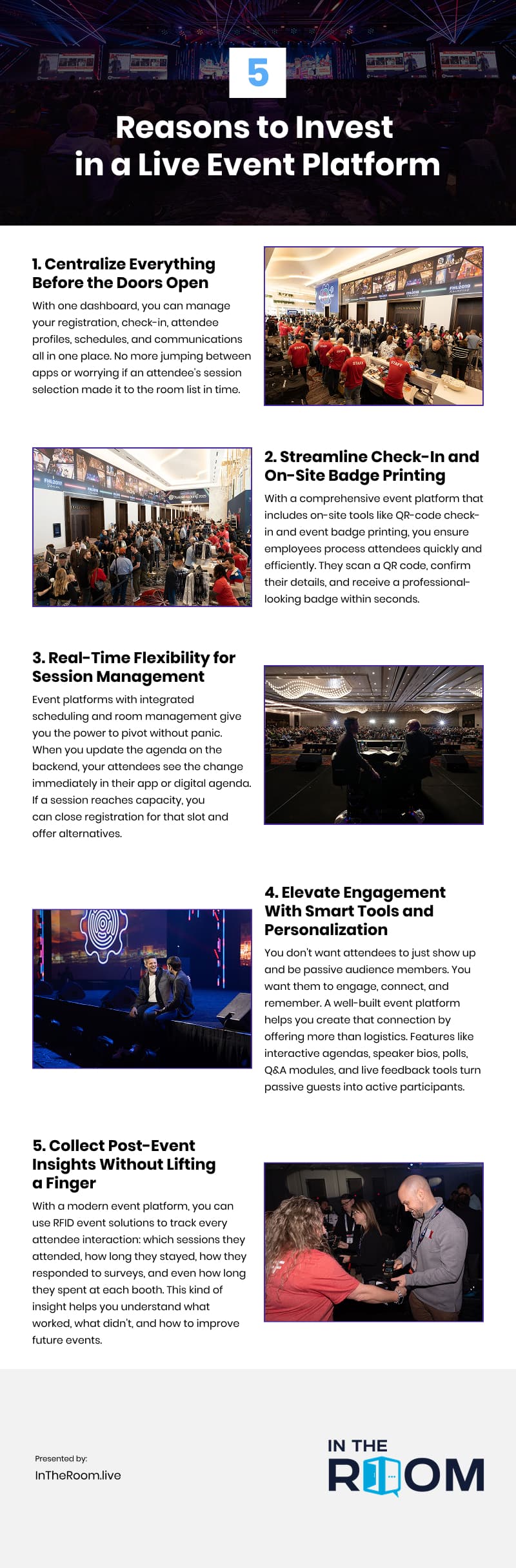
1. Centralize Everything Before the Doors Open
In the early days of event planning, you may have pieced together tools to manage different aspects of the event. One system for ticket sales. Another for emails. A separate list for dietary preferences. It may have worked, but barely. As events grow, so does complexity.
That’s why a centralized event platform is essential. With one dashboard, you can manage your registration, check-in, attendee profiles, schedules, and communications all in one place. No more jumping between apps or worrying if an attendee’s session selection made it to the room list in time.
Think about how much simpler your job becomes when you can see real-time check-in data or immediately notify attendees of updates. It removes layers of manual work and error-prone processes so you can focus on what matters: delivering an unforgettable event.
2. Streamline Check-In and On-Site Badge Printing
First impressions count. That starts the moment attendees arrive. Long lines at the registration desk create unnecessary stress. You don’t want to start your event by apologizing for delays or printer errors.
With a comprehensive event platform that includes on-site tools like QR-code check-in and event badge printing, you ensure employees process attendees quickly and efficiently. They scan a QR code, confirm their details, and receive a professional-looking badge within seconds. Not only does this reduce wait times, but it also makes your event look well-run and thoughtfully organized.
Some platforms even allow one-tap upsells for those who want to become a VIP once they see your event. When managing large crowds, powerful software like this saves time and improves flow without the need to expand your staffing.
3. Real-Time Flexibility for Session Management
Let’s face it: events are unpredictable. Speakers run late. Sessions fill up. Rooms get double-booked. Without the ability to update schedules and room assignments in real-time, you’re left scrambling with a walkie-talkie and a growing crowd of confused guests.
Event platforms with integrated scheduling and room management give you the power to pivot without panic. When you update the agenda on the backend, your attendees see the change immediately in their app or digital agenda. If a session reaches capacity, you can close registration for that slot and offer alternatives.
Rather than just reacting, you can actively manage the experience in real time. That level of agility makes all the difference, especially when dealing with high-value sponsors, speakers, or time-sensitive programming.
4. Elevate Engagement With Smart Tools and Personalization
You don’t want attendees to just show up and be passive audience members. You want them to engage, connect, and remember. A well-built event platform helps you create that connection by offering more than logistics.
Features like interactive agendas, speaker bios, polls, Q&A modules, and live feedback tools turn passive guests into active participants. You can personalize the experience by recommending sessions based on interests or sending reminders for activities they’ve signed up for.
Let’s say someone adds a product demo to their schedule. You can trigger a push notification 15 minutes before it starts. You may want to highlight a last-minute networking lunch. Just send a personalized message to targeted guests. This ability to tailor communications sets top-tier events apart.
You also create more value for sponsors by providing metrics on booth visits, session attendance, or engagement with their branded content. Everyone wins when your platform supports more than just logistics. A platform like this fosters meaningful experiences.
5. Collect Post-Event Insights Without Lifting a Finger
What happens after the event is just as important as what happens during it. You need data on attendance, engagement, feedback, and ROI. But gathering that information manually can be time-consuming, and most of it gets lost in the shuffle unless your platform captures it automatically.
With a modern event platform, you can use RFID event solutions to track every attendee interaction: which sessions they attended, how long they stayed, how they responded to surveys, and even how long they spent at each booth. This kind of insight helps you understand what worked, what didn’t, and how to improve future events.
For example, if you see that 75% of attendees dropped off after lunch, you know to rework the afternoon content. Or if a particular sponsor’s booth had unusually low traffic, you can adjust booth placement or signage at your next event. A high-powered platform helps you see that these aren’t just metrics; they’re opportunities for growth.
Bonus Reasons: Save Time, Reduce Errors, and Stay Sane
Let’s not overlook the personal benefit to you as the planner. It’s impossible to stay organized when you use several different platforms for event planning. A centralized event platform reduces the number of things you have to remember, double-check, and manually fix.
With several different platforms, you spend your morning taking care of last-minute registrants and misspelled badges, troubleshooting Wi-Fi, or finding missing dietary restrictions.
But with an integrated system, you can greet speakers, check in on guests, and ensure everything is running smoothly. You get to lead the event instead of babysitting the process.
This efficiency also gives you breathing room when unexpected issues arise. Instead of scrambling to catch up, you’re prepared to adapt.
Features to Look For in a Platform
If you’re evaluating platforms for your next event, prioritize ones that include:
- Integrated registration and check-in
- One-tap upsells
- A landing page for attendees
- Real-time session management and updates
- On-site badge printing support
- Engagement tools like polls, surveys, and Q&A
- Sponsor and exhibitor analytics
- Post-event reporting and insights
You don’t need every bell and whistle, but you do need the essentials to build an efficient and enjoyable experience.
Don’t Leave Experience to Chance
The in-person event landscape has evolved. Attendees expect more: faster check-in, better communication, and smarter engagement. And you can’t afford to rely on outdated systems that leave you vulnerable to delays, errors, or missed opportunities.
A well-integrated event platform empowers you to control every part of the experience, from the first email to the final session wrap-up. Think of it as much more than just an investment in software. A high-powered platform is your command center for delivering excellence.
So, if you’re still juggling spreadsheets, manually updating agendas, or chasing down feedback via email, it’s time to upgrade. Your event deserves better. And so do you.
Video
Infographic
Organizing an in-person event requires precision and coordination; an event platform can streamline each step. This infographic outlines five reasons to invest in a live event platform.